XGIMI AURA 3 Max: World’s First 4K 120Hz UST Projector
Last updated: September 7, 2026
If you’ve spent the last few years watching ultra-short-throw projectors slowly close the gap with giant flat-screen TVs, XGIMI just moved the goalposts. At IFA 2026 in Berlin, the company pulled the wrapping off the AURA 3 Series, a two-model UST lineup led by the flagship AURA 3 Max, and it’s carrying a spec sheet that nobody else in this category has matched yet: native 4K resolution at a full 120Hz refresh rate, out of a projector designed to sit on a low console instead of hanging from your ceiling.
That single spec — 4K/120 — is the headline, but it’s far from the only reason this launch matters. XGIMI has also opened pre-orders ahead of a Kickstarter campaign, which is an unusual move for a company that already sells through Amazon and its own storefront. Below, we’ll break down everything currently known about the AURA 3 Max and AURA 3 Pro: design, display technology, brightness, gaming performance, audio, connectivity, pricing, and how the two models compare with the outgoing AURA 2 and with rivals like the Hisense PX3-PRO.
Product Overview
The AURA 3 Series consists of two models built on the same core platform:
- AURA 3 Max — the flagship, rated at up to 5,700 ISO lumens
- AURA 3 Pro — the step-down model, rated at 4,100 ISO lumens
Both projectors share the same optical architecture, gaming feature set, audio system, and smart platform. The difference between them comes down almost entirely to brightness, which in turn affects how well each model performs in rooms with ambient light.
XGIMI is positioning the AURA 3 Series less as “a projector” and more as an alternative to a big-screen television — a pitch that’s become common in the UST category but one that this generation backs up with a genuinely new capability: high-frame-rate 4K gaming, something no ultra-short-throw projector has offered natively until now.
Design: Built to Be Seen, Not Hidden
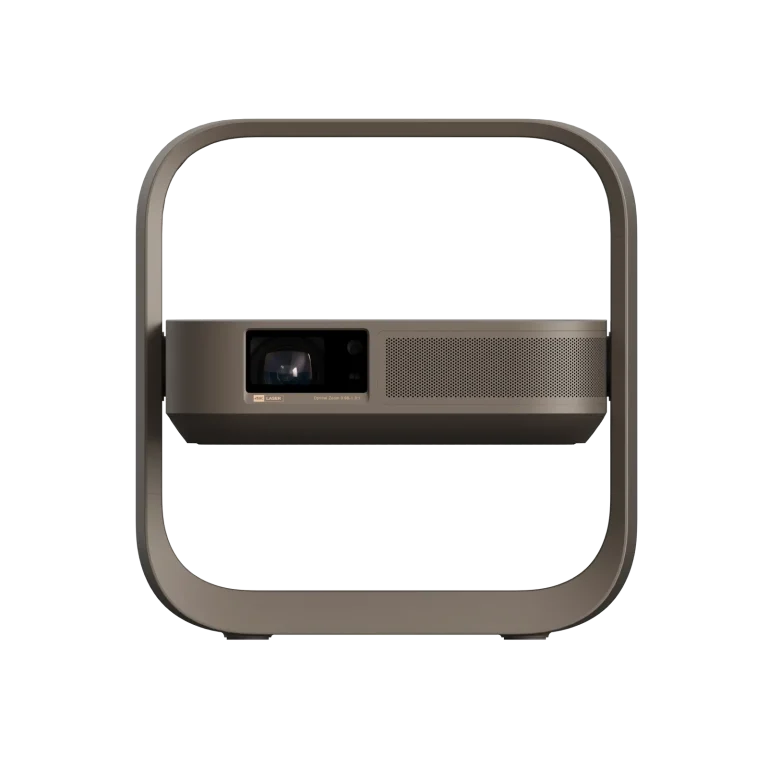
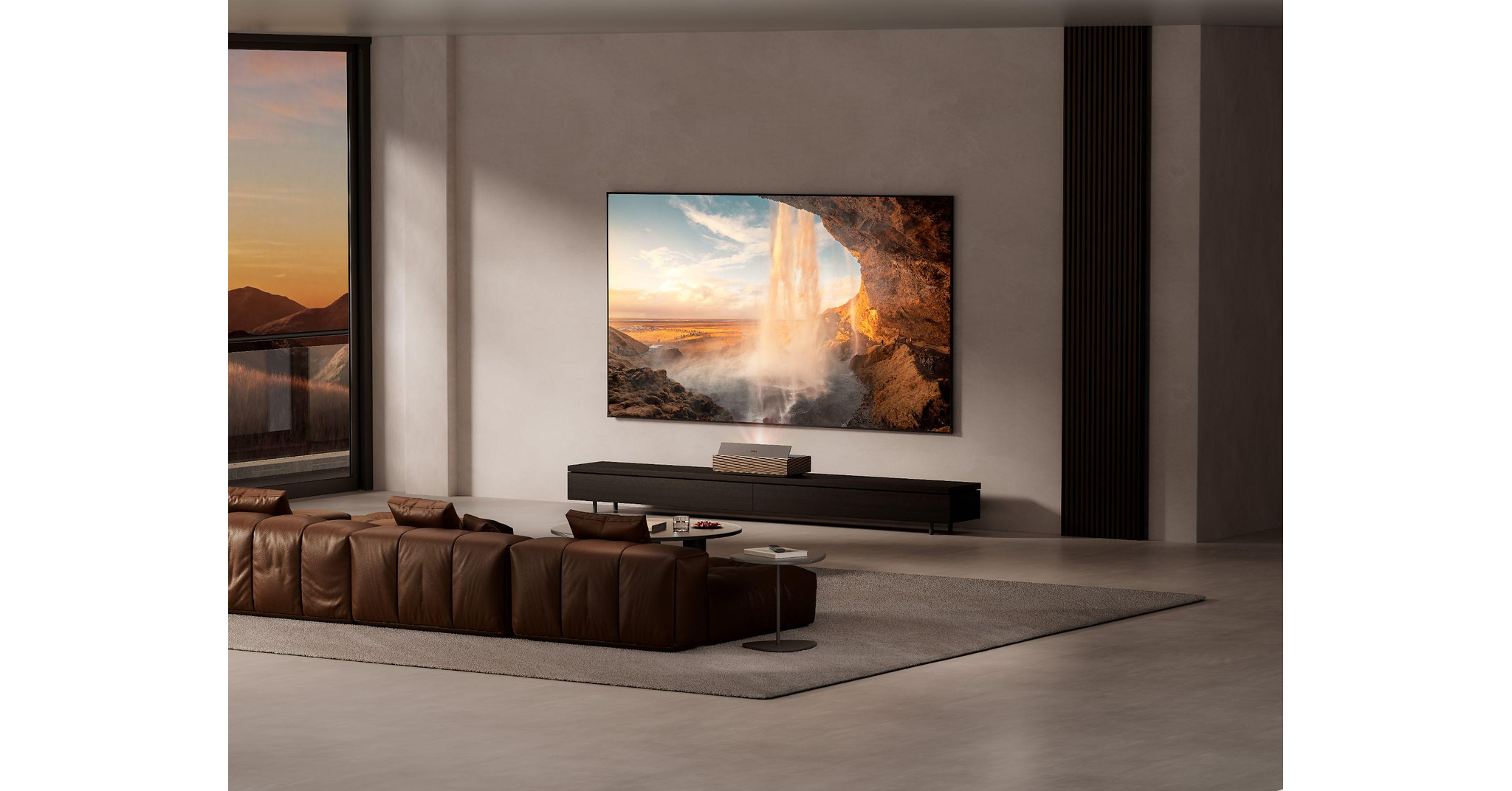
One of the enduring selling points of ultra-short-throw projectors is that they eliminate the ceiling-mount-and-cable-run installation that scares people away from traditional projection. The AURA 3 Series leans into that even further. XGIMI describes the design language as intended to blend into a living room rather than look like an accessory that needs to be tucked away, and the unit sits low enough on a media console to function as a design object in its own right rather than something hidden behind furniture.
This matters more than it might sound. A projector that looks like a component of your entertainment center, rather than a piece of AV equipment, is far more likely to actually get used daily instead of packed away after the novelty wears off.
Display Technology: RGB Triple Laser Meets Dynamic Dual Iris
At the core of the AURA 3 Series is an RGB Triple Laser light engine — a light source that uses individual red, green, and blue lasers rather than a single laser diode combined with a color wheel or phosphor. This approach typically produces richer, more saturated colors and better color volume, particularly in brighter scenes.
XGIMI pairs that laser engine with something it’s calling a Dynamic Dual Iris optical system, and this is the part of the announcement worth paying attention to. Dual-iris designs use two mechanically adjustable apertures to regulate exactly how much light reaches the screen at any given moment, which allows a projector to produce deeper black levels during dark scenes without sacrificing peak brightness during bright ones. XGIMI says this is the first time dual-iris technology has appeared in a UST projector, and the company is pairing it with what it calls Dynamic Black Light Enhancement (DBLE) to further improve shadow detail.
The result, according to XGIMI’s published specifications, is a native contrast ratio of up to 8,000:1 — a meaningfully higher figure than most laser UST projectors, which typically advertise contrast in the 2,000:1–3,000:1 range for native (non-dynamic) contrast.
Why Contrast Matters
Brightness gets all the marketing attention, but contrast — the difference between the darkest black and brightest white a projector can produce — is usually what separates a projector that looks “good on paper” from one that looks genuinely cinematic in person. A brighter projector with weak contrast will look washed out; the AURA 3 Max is explicitly designed to avoid that trade-off.
Image processing duties fall to XGIMI’s in-house X-VISION AI Image Processor, which handles real-time frame optimization — sharpening detail, refining edges, and adjusting contrast on a scene-by-scene basis rather than applying one static picture profile to everything you watch.
Brightness: Up to 5,700 ISO Lumens
Brightness is measured in ISO lumens, a standardized measurement that (unlike older “ANSI lumens” marketing figures from some brands) is meant to make comparisons across manufacturers more reliable. The AURA 3 Max is rated at up to 5,700 ISO lumens, while the AURA 3 Pro comes in at 4,100 ISO lumens.
For context, that puts the AURA 3 Max near the top of the current UST projector market — bright enough to remain watchable with some ambient light in the room, which has historically been the Achilles’ heel of projector-based home theater compared to an OLED or Mini-LED television. It won’t fully replace a TV in a sun-drenched living room at midday, but combined with a proper ambient-light-rejecting (ALR) screen, this level of brightness pushes UST projection much closer to “daytime usable” territory than earlier generations managed.
Resolution and the 4K/120Hz Breakthrough
This is the feature XGIMI is building the entire launch around. The AURA 3 Series uses two DLPC 8545 display controllers running in parallel, paired with a 0.47-inch DMD (digital micromirror device) chip, to output true 4K resolution at 120 frames per second. Previous-generation UST projectors — including XGIMI’s own AURA 2 — topped out at 4K/60Hz for native content, with high-refresh gaming modes typically dropping to 1080p to hit faster frame rates.
It’s worth being precise about what “4K/120” actually requires here: the full-resolution, high-refresh-rate signal path is delivered over HDMI 2.1 only — USB media playback does not support 4K at 120Hz. For gamers and home theater enthusiasts running a current-generation console or gaming PC through HDMI 2.1, though, this represents a genuine first for the ultra-short-throw category.
The projector also supports a 1080p mode at up to 240Hz for competitive gaming scenarios where raw frame rate matters more than resolution.
Contrast, HDR, and Color
Beyond the 8,000:1 native contrast figure, the AURA 3 Series supports a broad set of HDR and cinema formats:
- Dolby Vision
- HDR10+
- HDR10
- HLG (Hybrid Log-Gamma)
- IMAX Enhanced certification
- Filmmaker Mode
- Dynamic tone mapping
- Anti-Rainbow Effect (Anti-RBE) processing
Explaining the Jargon
- Dolby Vision / HDR10+ are dynamic HDR formats that adjust brightness and color scene-by-scene (or even frame-by-frame) rather than applying one static setting for an entire movie, resulting in more accurate highlights and shadow detail.
- Filmmaker Mode disables post-processing “enhancements” like motion smoothing so content displays the way its director intended.
- Anti-Rainbow Effect is specific to single-chip DLP projectors, which can occasionally produce brief flashes of red/green/blue fringing on high-contrast edges; XGIMI’s processing is designed to minimize that artifact.
Color coverage on the AURA 3 Max is rated at 110% of the BT.2020 color gamut, one of the wider color volume claims currently available in a consumer UST projector, and the series also retains support for 3D content — XGIMI ships two pairs of 3D glasses in the box, a feature that’s become rare as many competitors have dropped 3D support entirely.
Gaming Features
XGIMI is clearly chasing the gaming crowd here, and it shows in the spec sheet. The three HDMI ports include HDMI 2.1 inputs (ports 2 and 3 support the full 4K/120 pipeline) with support for:
- Variable Refresh Rate (VRR) — synchronizes the display’s refresh rate with your GPU’s output to reduce screen tearing
- Auto Low Latency Mode (ALLM) — automatically switches the projector into a low-latency gaming picture mode when it detects a console or PC
- AMD FreeSync Premium
- Dolby Vision Gaming — HDR tone mapping optimized for game content specifically, rather than film mastering
- Claimed input lag as low as 1ms in the fastest mode (a figure that, like most manufacturer latency claims, will need independent lab verification once review units ship)
For a 120-inch or larger image with console-grade or PC-grade latency and full 4K/120 support, this is a meaningfully more serious gaming spec sheet than most UST projectors have offered to date.
Operating System and Smart Platform
The AURA 3 Series runs Google TV, giving it native access to Netflix, Prime Video, YouTube, Disney+, and the rest of the standard streaming app library without needing an external streaming stick, plus built-in Google Cast and Google Assistant voice control. This is consistent with XGIMI’s recent product line and keeps the AURA 3 competitive with smart TVs on the software side — a category where projectors have historically lagged behind.
Audio
Rather than treating sound as an afterthought, XGIMI built in four 20-watt Harman Kardon speakers for a total of 80 watts of built-in audio, with support for Dolby Atmos and DTS Virtual:X for virtual surround processing. That’s a substantial built-in sound system by projector standards — enough to function as a self-contained home theater setup without an immediate soundbar purchase, even if a dedicated surround system will still outperform any built-in speaker array at the margins.
Connectivity: WiFi, Bluetooth, USB, HDMI
- HDMI: Three ports total, with two supporting full HDMI 2.1 bandwidth (4K/120)
- WiFi: Built-in wireless networking for streaming and Google TV connectivity
- Bluetooth: Supported for audio output and remote pairing
- USB: Available for local media playback (note: the 4K/120 pipeline is HDMI-exclusive; USB playback does not carry the full-bandwidth signal)
Throw Ratio and Projection Size
The AURA 3 Series uses an ultra-short throw ratio of 0.163:1, which means the projector can produce a 120-inch image from roughly eight inches of clearance to the wall or screen. Supported screen sizes range up to 200 inches, depending on ambient light and screen material, with some listings citing a supported range starting around 80 inches. For comparison, the outgoing AURA 2 used a 0.177:1 throw ratio and needed about 17.8 cm (roughly 7 inches) for a 100-inch image — so the AURA 3 pushes a noticeably bigger picture into a similar footprint.
Setup is assisted by an automated alignment suite that includes autofocus, automatic keystone correction, wall-flatness compensation, wall-color adaptation, and screen-alignment assist — features aimed at getting a properly calibrated image without manual trial and error.
Power Consumption and Noise Level
XGIMI has not yet published detailed power consumption or dB(A) noise-level figures for the AURA 3 Series in its initial pre-order materials. Given the increased brightness output versus the AURA 2, it’s reasonable to expect somewhat higher power draw and cooling-fan noise at maximum brightness; we’ll update this article once official figures or independent lab measurements become available.
Comparison With the Previous Generation (AURA 2)
The AURA 3 Series is not simply “the AURA 2 with a brighter bulb.” Here’s how the generations stack up on paper:
| Spec | XGIMI AURA 2 (2024) | XGIMI AURA 3 Max (2026) |
|---|---|---|
| Light source | Hybrid laser (Dual Light 2.0) | RGB Triple Laser |
| Brightness | 2,300 ISO lumens | Up to 5,700 ISO lumens |
| Max refresh rate | 4K/60Hz | 4K/120Hz |
| Native contrast | Dynamic, up to 1,000,000:1 | 8,000:1 native (dual iris) |
| Color gamut | 99% DCI-P3 | 110% BT.2020 |
| Throw ratio | 0.177:1 | 0.163:1 |
| Smart platform | Android TV | Google TV |
| Launch price | $2,699 | $2,199–$2,399 (Kickstarter pricing) |
The jump in refresh rate and the move to a full RGB triple-laser engine are the two biggest architectural changes, and — notably — XGIMI’s Kickstarter pricing structure for the AURA 3 undercuts the AURA 2’s original launch price, which is unusual for a flagship successor with a substantially upgraded spec sheet.
Comparison With Competitors
The UST projector market has gotten considerably more crowded and more capable over the past two years. Here’s how the AURA 3 Max stacks up against two of its closest current rivals:
| Spec | XGIMI AURA 3 Max | Hisense PX3-PRO | AWOL Vision LTV-3000 Pro |
|---|---|---|---|
| Light source | RGB Triple Laser | TriChroma Triple Laser | Triple Laser |
| Brightness | Up to 5,700 ISO lumens | ~3,000 ISO lumens | Comparable premium-tier brightness |
| Native 4K/120 support | Yes (HDMI 2.1) | No (accepts 4K/120 signal but outputs via 1080p/240Hz gaming mode) | No |
| Screen size range | 80–200 inches | 80–150 inches | Up to 150 inches |
| Smart platform | Google TV | Google TV | Android-based |
| HDR support | Dolby Vision, HDR10+, HDR10, HLG, IMAX Enhanced | Dolby Vision, IMAX Enhanced | Dolby Vision, HDR10+ |
| Launch price | $2,199–$2,399 (Kickstarter) | ~$2,799–$3,499 | Premium tier pricing |
The most important distinction is the one XGIMI is leaning on hardest: while Hisense’s PX3-PRO can accept a 4K/120Hz input signal, it doesn’t render that signal in native 4K — its high-refresh gaming mode drops to 1080p at 240Hz instead. If XGIMI’s claim holds up under independent testing, the AURA 3 Max would be the first ultra-short-throw projector that actually displays 4K detail at 120Hz rather than sacrificing resolution for frame rate.
It’s also worth noting that a Chinese-market version of this hardware reportedly launched roughly four months prior to this global pre-order announcement, meaning the underlying platform has some real-world track record even though Western availability is brand new.
Availability and Pricing
XGIMI has structured this launch around a hybrid pre-order-to-Kickstarter model:
- Pre-orders are open now at XGIMI’s official website with a refundable $50 deposit
- The deposit unlocks an additional $200 off the final price
- The full Kickstarter campaign launches October 20, 2026
- Depositors receive an email link on launch day to complete their pledge
- Kickstarter pricing: AURA 3 Max at $2,399 (dropping to roughly $2,199 with the deposit discount) and AURA 3 Pro at $2,199 (dropping to roughly $1,999 with the deposit discount)
Running a Kickstarter campaign for a product that, per some reporting, has already been selling in a major market for several months is a marketing structure rather than traditional crowdfunding — it functions more as an early-bird discount mechanism than a fundraising campaign, though it does mean early backers are taking on some of the usual crowdfunding timeline uncertainty around shipping dates.
Who Should Buy the AURA 3 Max?
Good fit for:
- Home theater enthusiasts who want a genuinely large image (100″+) without a ceiling-mounted long-throw setup
- Console or PC gamers who want native 4K at high refresh rates on a massive screen
- Buyers replacing an aging UST projector or considering a projector-as-TV-replacement setup
- Anyone who values built-in sound quality, since the 80W Harman Kardon system is unusually capable for this category
Maybe wait if:
- You need the projector primarily for bright daytime rooms (even at 5,700 lumens, direct sunlight will still wash out any projector)
- You want independently verified performance numbers before committing (contrast, latency, and brightness claims are all manufacturer-supplied at this stage)
- You’re not comfortable with the pre-order/Kickstarter timeline uncertainty rather than a straightforward retail purchase
Pros and Cons
Pros:
- First UST projector with native 4K resolution at 120Hz
- Class-leading brightness at up to 5,700 ISO lumens
- Dual-iris optical system for meaningfully improved native contrast
- Comprehensive HDR format support, including Dolby Vision and IMAX Enhanced
- Strong built-in 80W Harman Kardon audio system with Dolby Atmos
- Full suite of automated setup tools (autofocus, keystone, wall-color adaptation)
- Aggressive launch pricing relative to the outgoing AURA 2 and several competitors
Cons:
- 4K/120 pipeline is limited to HDMI 2.1 sources; USB media playback doesn’t get the full-bandwidth mode
- Key performance claims (contrast, 1ms latency) are unverified by independent reviewers as of this writing
- Kickstarter-style rollout introduces some timeline and shipping uncertainty versus a standard retail launch
- Official power consumption and noise-level specs haven’t been published yet
- Requires a proper ALR screen to fully realize its brightness and contrast advantages in typical living rooms
Market Impact
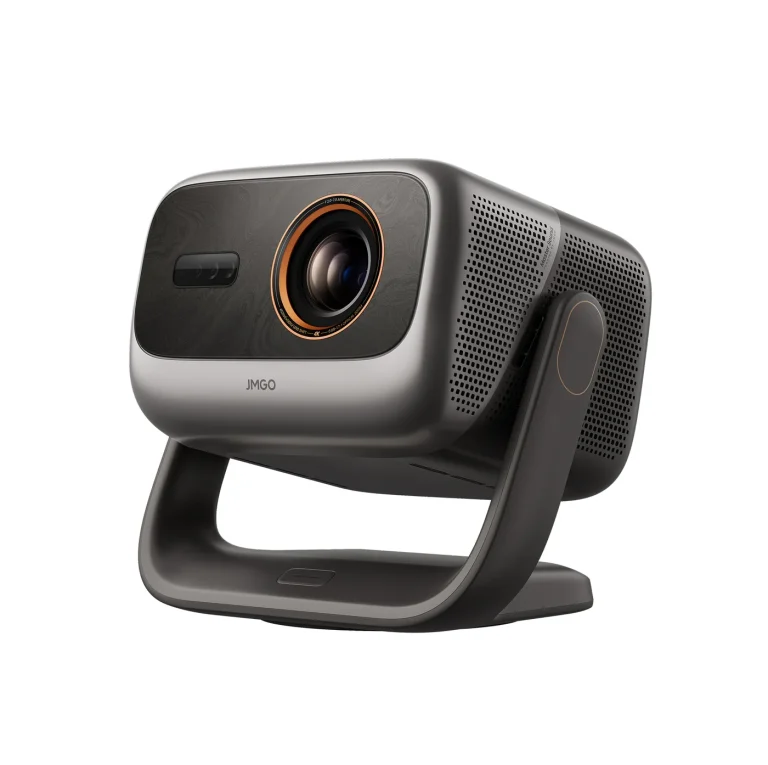
The AURA 3 Series arrives at a moment when UST projectors are competing more directly with giant flat-panel TVs than ever before, as 100-inch-plus MicroLED and Mini-LED televisions have become (slightly) more attainable. XGIMI’s answer is to lean into the two areas where projectors can still decisively win: enormous screen size at a fraction of the cost per inch, and — with this launch specifically — gaming performance that finally matches what serious gamers expect from a modern display. If the 4K/120 claims hold up in independent testing, expect rival brands like Hisense, AWOL Vision (see our direct AURA 3 Max vs. LuxVision comparison), and Samsung to respond with their own high-refresh 4K UST models within the next product cycle — and beyond the UST category, all-in-one lifestyle projectors are already racing to keep up, as seen in JMGO’s competing IRIS Ultra Max.
Predicted Future Availability
Based on the disclosed timeline, expect the following rollout:
- Now: Refundable deposit pre-orders open globally via XGIMI’s website
- October 20, 2026: Kickstarter campaign goes live with final pledge pricing
- Post-campaign (likely Q1 2027): Broader retail availability through Amazon and XGIMI’s direct storefront, based on the pattern of XGIMI’s previous Kickstarter-style launches
Frequently Asked Questions
Is the XGIMI AURA 3 Max really the first 4K 120Hz UST projector?
Based on currently available specifications, yes — it appears to be the first ultra-short-throw projector to natively display 4K resolution at 120Hz rather than dropping to a lower resolution to hit that frame rate. Competing UST models, including Hisense’s PX3-PRO, can accept a 4K/120 input signal but output it at reduced resolution.
How much does the XGIMI AURA 3 Max cost?
Kickstarter pricing is set at $2,399 for the AURA 3 Max and $2,199 for the AURA 3 Pro, with an additional $200 discount for customers who placed a $50 refundable deposit ahead of the October 20, 2026 campaign launch.
What’s the difference between the AURA 3 Max and AURA 3 Pro?
The two models share the same optical architecture, gaming features, audio system, and smart platform. The primary difference is brightness: the AURA 3 Max reaches up to 5,700 ISO lumens, while the AURA 3 Pro is rated at 4,100 ISO lumens.
Does the AURA 3 Series support Dolby Vision?
Yes. The lineup supports Dolby Vision, HDR10+, HDR10, HLG, and IMAX Enhanced, along with Filmmaker Mode and Dolby Vision Gaming for HDR-enabled console and PC gaming.
What screen size can the AURA 3 Max project?
With its 0.163:1 throw ratio, the AURA 3 Max can produce a 120-inch image from roughly eight inches of wall clearance, with supported screen sizes reaching up to 200 inches depending on ambient lighting and screen material.
When will the XGIMI AURA 3 Series ship?
The Kickstarter campaign launches October 20, 2026. Based on XGIMI’s past product rollouts, broader retail availability would likely follow in the months after the campaign concludes.
Conclusion
The XGIMI AURA 3 Series is one of the more consequential UST projector launches of 2026, not because any single spec is unprecedented in isolation, but because the combination — native 4K at 120Hz, 5,700 ISO lumens, dual-iris contrast, and a genuinely capable built-in sound system — hasn’t existed in one ultra-short-throw package before. If XGIMI’s claims survive independent testing, the AURA 3 Max has a real shot at becoming the new benchmark for premium UST projection, especially for buyers who want a massive screen and serious gaming performance in the same box. We’ll update this article with hands-on impressions and verified lab measurements as review units become available ahead of the October 20 Kickstarter launch.