Aurzen ZIP Pro: World’s First Tri-Fold 1080p Pocket Projector
Last updated: September 11, 2026
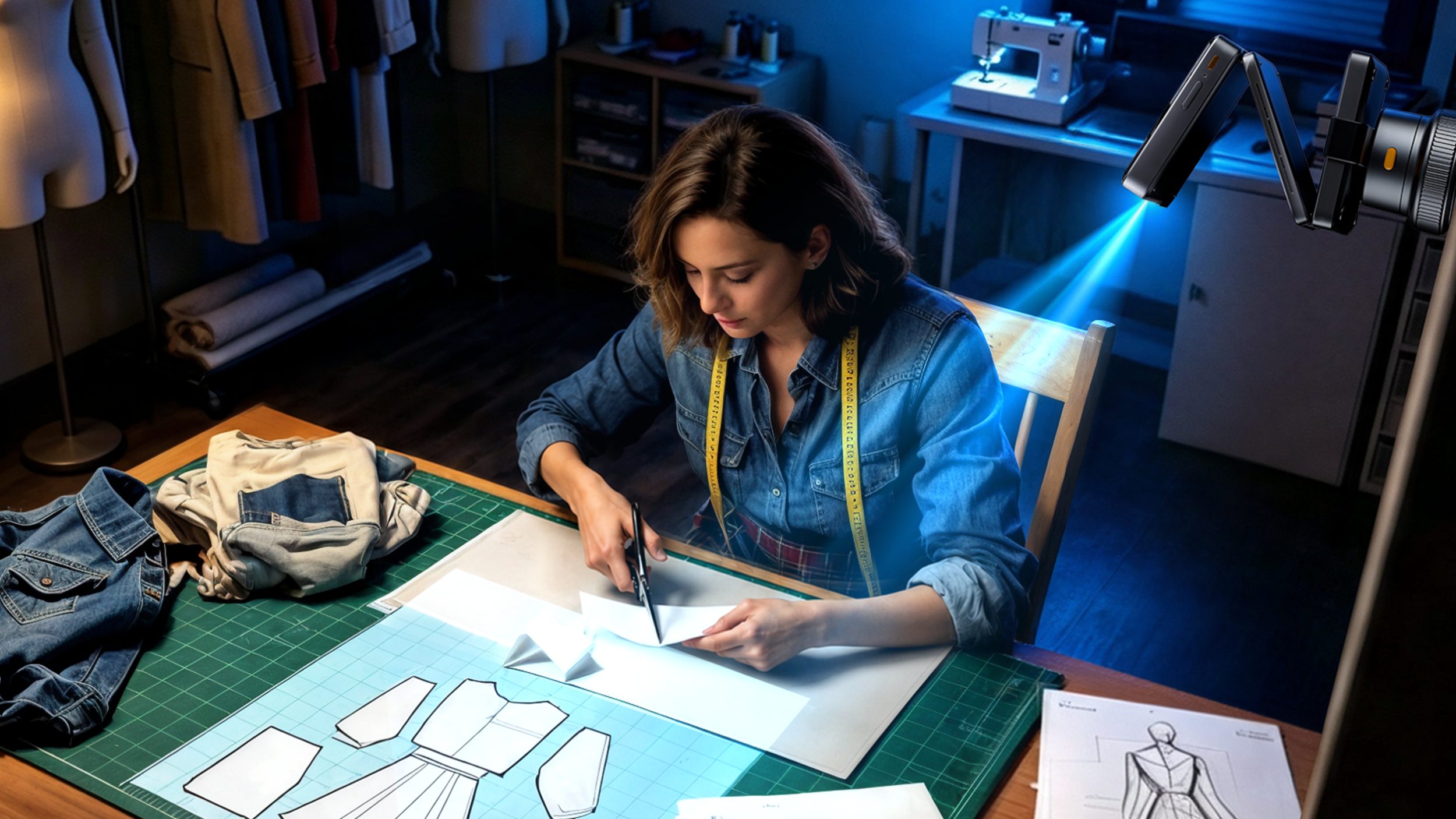
Most projectors marketed as “portable” are portable the way a laptop bag is portable — technically carryable, not something you’d casually toss in a jacket pocket. Aurzen wants to change that math. The company’s new ZIP Pro, announced ahead of IFA 2026 and officially unveiled September 2–4, is a tri-fold pocket projector that Aurzen is calling the world’s first of its kind to offer native 1080p resolution in a genuinely pocket-sized body.
This isn’t Aurzen’s first attempt at the format — the original Aurzen ZIP launched in September 2025 (see our full IFA 2026 roundup for everything else announced alongside the ZIP Pro) with a distinctive Z-shaped folding design and modest 720p specs. The ZIP Pro keeps that same folding mechanism but meaningfully upgrades nearly everything around it: real Full HD resolution, doubled brightness, a bigger battery, a built-in touchscreen, and console-specific gaming support. Below, we’ll break down everything currently known about the ZIP Pro — design, display technology, brightness, connectivity, battery life, audio, pricing, and how it compares to the original ZIP and to other pocket-projector competitors.
Product Overview
The Aurzen ZIP Pro is a single-model, tri-fold pocket projector built around one core idea: shrink a genuinely capable 1080p projector down to a size and weight you’d actually carry every day. Aurzen frames the engineering challenge with a formula the company has reportedly engraved directly onto the device itself, representing the trade-off between size, brightness, optical efficiency, and thermal management — the four variables that normally fight each other in ultra-compact projector design.
Folded, the ZIP Pro measures 115 × 97 × 44mm and weighs 586 grams — roughly the size of a large power bank, or about the weight of two folded smartphones. Unfolded, it can project an image up to 80 inches diagonally.
Design: The Tri-Fold Stand Is the Whole Point
The headline feature isn’t a spec number — it’s the shape. The ZIP Pro uses a Z-shaped tri-fold structure that does double duty as both the projector housing and a self-supporting, multi-angle stand. Instead of needing a tripod, a stack of books, or a dedicated mount, you unfold the body itself and adjust the angle of the hinge sections to aim the image at a wall, ceiling, or tent roof.
This matters more than it might initially sound like. Portable projectors have historically forced a choice: buy a compact unit and juggle propping it up on whatever’s nearby, or buy something with a built-in stand and accept the extra bulk that comes with it. Aurzen’s tri-fold design tries to eliminate that trade-off by making the stand and the projector body the same physical structure.
To make setup genuinely fast once you’ve unfolded it, the ZIP Pro includes Time-of-Flight (ToF) autofocus and four-point keystone correction. ToF autofocus uses a small sensor to measure the exact distance to the projection surface using reflected light pulses, which is generally faster and more consistent than the older contrast-detection autofocus methods still common in budget projectors. Four-point keystone correction can square up the image even when the projector is aimed from an angled position — front, side, or even a rough ceiling angle — rather than requiring the unit to sit dead-center and level.
Display Technology and Resolution: Native 1080p, Not Upscaled
The ZIP Pro’s core upgrade over the original ZIP is resolution. Where the first-generation ZIP topped out at 720p, the ZIP Pro moves to native 1080p Full HD at 60Hz, delivered through a DLP (Digital Light Processing) projection system.
Why “Native” Matters
A lot of budget and compact projectors advertise “1080p support,” which often just means the projector can accept a 1080p input signal and then downscale it to a lower actual display resolution — commonly 720p or less. A native 1080p panel is physically capable of displaying the full 1,920 × 1,080 pixel grid without that downscaling step, which means sharper text, cleaner edges, and generally less visible pixelation, especially on detail-heavy content.
Aurzen achieved this jump largely through what it’s calling a proprietary 10.7mm ultra-slim optical engine — the company says this is the world’s first optical engine of its kind at that thickness, and it’s the core piece of engineering that allows the ZIP Pro to fit a real 1080p DLP system into such a thin folding body without the bulk that resolution upgrades typically require.
Brightness: 200 ANSI Lumens
The ZIP Pro is rated at 200 ANSI lumens, doubled from the original ZIP’s 100 ANSI lumens. ANSI lumens is an older but still widely used brightness standard, measured under a specific set of test conditions across nine points on a projected test image.
It’s worth being upfront about what 200 ANSI lumens actually means in practice: this is a dark-room and evening-viewing projector, not something designed to compete with ambient light. Aurzen doesn’t claim otherwise — the company explicitly positions the ZIP Pro’s image performance as tuned for darkened or dimly lit spaces rather than daytime use. For context, most home-theater UST projectors in this same roundup are rated in the thousands of ISO lumens; the ZIP Pro is optimized for an entirely different use case, where portability is the priority and a properly dark room is assumed.
Contrast and Color
Aurzen has not published a specific native contrast ratio figure for the ZIP Pro in its initial launch materials, though the company notes that the move to a larger DLP display system versus the original ZIP contributes to deeper contrast, finer detail, and reduced screen-door effect (the faint visible grid pattern between pixels that can show up on lower-resolution or lower-quality projected images). We’ll update this section with a specific contrast figure once Aurzen publishes one or independent testing becomes available.
Gaming Features: A Real Nintendo Switch Mode
For a pocket-sized projector, the ZIP Pro has a surprisingly specific gaming feature: direct USB-C video input from a Nintendo Switch, paired with a dedicated Game Mode. This means you can plug a Switch directly into the projector via USB-C and get an optimized picture profile without needing a separate dock, HDMI adapter, or streaming box — a detail clearly aimed at the exact kind of casual, on-the-go use case (hotel rooms, dorms, camping trips) the ZIP Pro is built around.
Operating System and Smart Features
The ZIP Pro doesn’t run a full smart TV platform like Google TV or Android TV — instead, it leans on wireless casting protocols to pull content from whatever device you already have:
- AirPlay for streaming from Apple devices
- Miracast for screen mirroring from Windows and Android devices
- DLNA for streaming from networked media servers
- Google Cast for casting from Android and Chrome
Notably, Aurzen also includes AirLink P2P, a peer-to-peer screen-mirroring mode that works without an active WiFi network — a genuinely useful feature for camping, travel, or anywhere reliable WiFi isn’t guaranteed.
One new addition on the ZIP Pro versus the original ZIP is a built-in touchscreen display on the device itself, showing battery level, connection status, and basic controls without needing to pull out a phone or remote.
Audio
Built-in audio comes from dual 2-watt stereo speakers — modest, as you’d expect from a device this size, and clearly intended for casual solo or close-proximity group viewing rather than filling a room. More interestingly, the ZIP Pro supports dual Bluetooth headphone pairing, letting two people connect their own Bluetooth headphones simultaneously to watch or listen together without disturbing anyone nearby — a genuinely useful feature for shared spaces like hotel rooms, dorms, or tents where you don’t want the speaker audio carrying.
Connectivity: WiFi, Bluetooth, USB, HDMI
- USB-C: Primary video input port, including direct Nintendo Switch video input with Game Mode; also used for 65W USB-C PD fast charging
- WiFi: Built-in wireless networking for AirPlay, Miracast, DLNA, and Google Cast
- Bluetooth: Supports dual simultaneous headphone connections
- HDMI: Aurzen’s materials emphasize USB-C as the primary wired video input; a dedicated HDMI port is not confirmed in official specifications at the time of writing, so wired non-USB-C sources may require an adapter — we’ll confirm this detail as more information becomes available
Battery Life and Charging
The ZIP Pro is powered by a 38Wh battery (built from two 5,000mAh cells), offering approximately 2.5 hours of playback in ECO mode. Recharging is handled through 65W USB-C Power Delivery fast charging, which should bring the battery back to a usable level relatively quickly given the battery’s modest overall capacity compared to a laptop or power bank.
A Practical Note on Battery Expectations
2.5 hours in ECO mode is enough for a single movie or a couple of TV episodes, but not necessarily an all-evening camping trip or a long car ride without a charging option nearby. Buyers planning extended off-grid use should factor in either a USB-C power bank or access to an outlet partway through a longer session.
Throw Ratio and Projection Size
Aurzen doesn’t publish a formal throw ratio spec for the ZIP Pro the way UST or home-theater projectors typically do, since the tri-fold stand is designed for flexible, close-to-medium range placement rather than a fixed installation distance. The company’s official figures cap the projected image at up to 80 inches diagonally, which is a genuinely large image for a device this size, though actual usable size and clarity will depend heavily on room darkness and projection distance given the modest 200-lumen brightness rating.
Comparison With the Previous Generation (Aurzen ZIP)
The ZIP Pro is a fairly comprehensive upgrade over the original ZIP, which launched in September 2025:
| Spec | Aurzen ZIP (2025) | Aurzen ZIP Pro (2026) |
|---|---|---|
| Resolution | 720p | Native 1080p Full HD @ 60Hz |
| Brightness | 100 ANSI lumens | 200 ANSI lumens |
| Battery | Smaller capacity, ~1.5 hours playback | 38Wh (2×5,000mAh), ~2.5 hours in ECO mode |
| Charging | Standard charging | 65W USB-C PD fast charging |
| Built-in display | None | Touchscreen status display |
| Bluetooth audio | Not featured | Dual simultaneous headphone support |
| Console support | Not specifically featured | Direct Nintendo Switch USB-C input + Game Mode |
| Folding design | Z-shape tri-fold, 0°–90° | Z-shape tri-fold, multi-angle |
Every core spec moved forward with the ZIP Pro, and the resolution jump from 720p to native 1080p is the most significant single change — it’s the difference between a genuinely watchable Full HD image and a projector best suited to casual, forgiving content.
Comparison With Competitors
The pocket-projector category is crowded, but most competitors trade off the same variables Aurzen is trying to solve simultaneously: size, brightness, resolution, and battery life. Here’s how the ZIP Pro stacks up against two commonly compared portable projectors:
| Spec | Aurzen ZIP Pro | Typical Compact 1080p Projector | Typical Ultra-Mini Projector |
|---|---|---|---|
| Weight | 586g | 800g–1.5kg | 300–500g |
| Resolution | Native 1080p | Native or upscaled 1080p | 480p–720p |
| Brightness | 200 ANSI lumens | 300–600 ANSI lumens | 50–150 ANSI lumens |
| Built-in stand | Yes (folding body doubles as stand) | Rarely | Sometimes (small kickstand) |
| Battery | 38Wh, ~2.5 hrs ECO | Often mains-only or smaller battery | Small battery, 1–2 hrs |
| Price | $629.99 ($579.99 early-bird) | $300–$900 | $50–$200 |
The ZIP Pro’s real differentiator isn’t raw brightness — plenty of “compact” 1080p projectors are brighter, but they’re also bulkier, mains-powered, or lack any real portability story beyond “it’s smaller than a home theater unit.” The tri-fold, stand-free design and genuine pocket dimensions are what set it apart, at the cost of brightness that limits it to dark-room use.
Availability and Pricing
The Aurzen ZIP Pro is available to pre-order now:
- Standard price: $629.99
- Early-bird introductory price: $579.99
- Available directly through Aurzen’s official website
Unlike some of the flagship home-theater launches we’ve covered recently, this is a straightforward direct pre-order rather than a Kickstarter or deposit-reservation model, which typically means a more predictable shipping timeline.
Who Should Buy the ZIP Pro?
Good fit for:
- Frequent travelers who want a real big-screen option in a hotel room without checking a bag for it
- Campers, van-lifers, or anyone who wants big-screen viewing without access to a wall outlet for a few hours
- Nintendo Switch owners who want a simple, dock-free way to project handheld gaming onto a large surface
- Anyone sharing a small space (dorm, shared bedroom, tent) who values the dual-Bluetooth-headphone feature for quiet co-viewing
Maybe wait if:
- You need any real daytime or ambient-light usability — 200 ANSI lumens is strictly a dark-room spec
- You want a full smart TV platform (Google TV, Android TV) built in rather than relying on casting from another device
- You’re looking for a projector that can also function as a serious home-theater centerpiece — the ZIP Pro is purpose-built for portability, not to replace a living-room setup
Pros and Cons
Pros:
- Genuinely pocket-sized: 586g, about the size of a large power bank
- Native 1080p resolution — a real upgrade over most projectors this small, which typically top out well below Full HD
- Clever tri-fold design eliminates the need for a separate stand or tripod
- ToF autofocus and four-point keystone correction make setup fast and largely hands-off
- Dual Bluetooth headphone support is a genuinely useful, uncommon feature for shared spaces
- Direct Nintendo Switch USB-C input with dedicated Game Mode
- AirLink P2P casting works without WiFi, useful for off-grid situations
- Straightforward direct pre-order pricing, no crowdfunding uncertainty
Cons:
- 200 ANSI lumens strictly limits it to dark-room and evening use
- No formal smart TV platform built in; relies on casting from a phone, tablet, or laptop
- Battery life (~2.5 hours in ECO mode) is modest for longer viewing sessions
- No confirmed native HDMI port; USB-C is the primary wired video connection
- No published native contrast ratio at launch
- Built-in audio (dual 2W speakers) is minimal, though Bluetooth headphone support helps offset this
Market Impact
The ZIP Pro arrives as part of a broader trend of manufacturers treating “portable” as a genuine design constraint rather than a marketing label loosely applied to anything under a certain weight. Aurzen’s decision to double down on its Z-fold format — rather than chasing brightness or a full smart platform — signals a bet that a meaningful segment of buyers care more about a projector that behaves like a piece of travel gear than one that tries to replace a living-room TV. If the ZIP Pro sells well, expect more competitors to experiment with fold-away or stand-integrated designs rather than the traditional small-box-plus-tripod approach that’s dominated the pocket-projector category for years.
Predicted Future Availability
Based on currently available information:
- Now: Pre-orders open directly through Aurzen’s website at $579.99 (early-bird) / $629.99 (standard)
- Expected near-term: Broader retail availability, likely including Amazon, following the pattern of Aurzen’s original ZIP launch
- Ongoing: Firmware updates are already part of Aurzen’s support pattern for the original ZIP (improved autofocus speed, keystone correction, device compatibility), so early ZIP Pro buyers should expect similar post-launch refinement
Frequently Asked Questions
Is the Aurzen ZIP Pro really the first tri-fold Full HD pocket projector?
Based on Aurzen’s own claims and available reporting, yes — Aurzen positions the ZIP Pro as the world’s first tri-fold pocket projector to offer native 1080p Full HD resolution, building on its original ZIP (2025), which topped out at 720p.
How much does the Aurzen ZIP Pro cost?
The ZIP Pro is priced at $629.99 standard, with an early-bird introductory price of $579.99 available now through pre-order on Aurzen’s official website.
How bright is the Aurzen ZIP Pro, and can I use it in a bright room?
The ZIP Pro is rated at 200 ANSI lumens, which is designed for dark-room or evening viewing rather than daytime or well-lit spaces. It won’t compete with ambient light the way a much brighter home-theater projector would.
Does the Aurzen ZIP Pro have a smart TV platform like Google TV?
No. Instead, it relies on wireless casting protocols — AirPlay, Miracast, DLNA, and Google Cast — plus a WiFi-free AirLink P2P mode, to stream content from a connected phone, tablet, or laptop.
Can I connect a Nintendo Switch to the Aurzen ZIP Pro?
Yes. The ZIP Pro supports direct USB-C video input from a Nintendo Switch, along with a dedicated Game Mode picture profile, without requiring a separate dock or HDMI adapter.
How long does the Aurzen ZIP Pro’s battery last?
Aurzen rates the built-in 38Wh battery at approximately 2.5 hours of playback in ECO mode, with 65W USB-C PD fast charging for quicker recharges between sessions.
Conclusion
The Aurzen ZIP Pro isn’t trying to be a home-theater replacement, and it’s honest about that trade-off — 200 ANSI lumens and a modest built-in speaker system make clear this is a projector for dark rooms, travel bags, and spontaneous big-screen moments rather than a living-room centerpiece. What it does well, it does distinctively: a genuinely pocket-sized, stand-free tri-fold design, a real native 1080p image instead of a downscaled one, and thoughtful details like dual Bluetooth headphone support and direct Nintendo Switch input that speak to how people actually use portable projectors. For travelers, campers, and gamers who want a real big screen without carrying real bulk, the ZIP Pro is one of the more interesting pocket projector launches of 2026. We’ll follow up with hands-on impressions and independently measured battery life and image quality once units are in hand.