Epson Projectors Turn Opera Subtitles Into Scenic Art
How Epson’s Laser Projectors Turned Opera Subtitles Into Scenic Art
Most projector news is about specs and prices. This one is about what a projector can actually do in the hands of people solving a real creative problem — and it’s a genuinely interesting application story for anyone curious about what large-venue projection is capable of beyond home theater.
The Problem: Subtitles That Pull You Out of the Story
Opera has long relied on translated subtitles — traditionally shown on small monitors near the stage or on the backs of seats — to make foreign-language productions accessible. The trouble, as MASARY Studios co-founder Sam Okerstrom-Lang put it, is that “you’re listening and reading all at once, which can disconnect the viewer from the richness of the performance.” Every glance away from the stage to read a translation is a glance away from the performance itself.
The Project: Boston Lyric Opera’s New Home
When Boston Lyric Opera (BLO) prepared to debut its first production at its new Opera + Community Studios in Boston’s Fort Point neighborhood, it brought in MASARY Studios — working alongside legendary director and BLO Artistic Advisor Anne Bogart — to rethink what translation could look like on stage entirely.
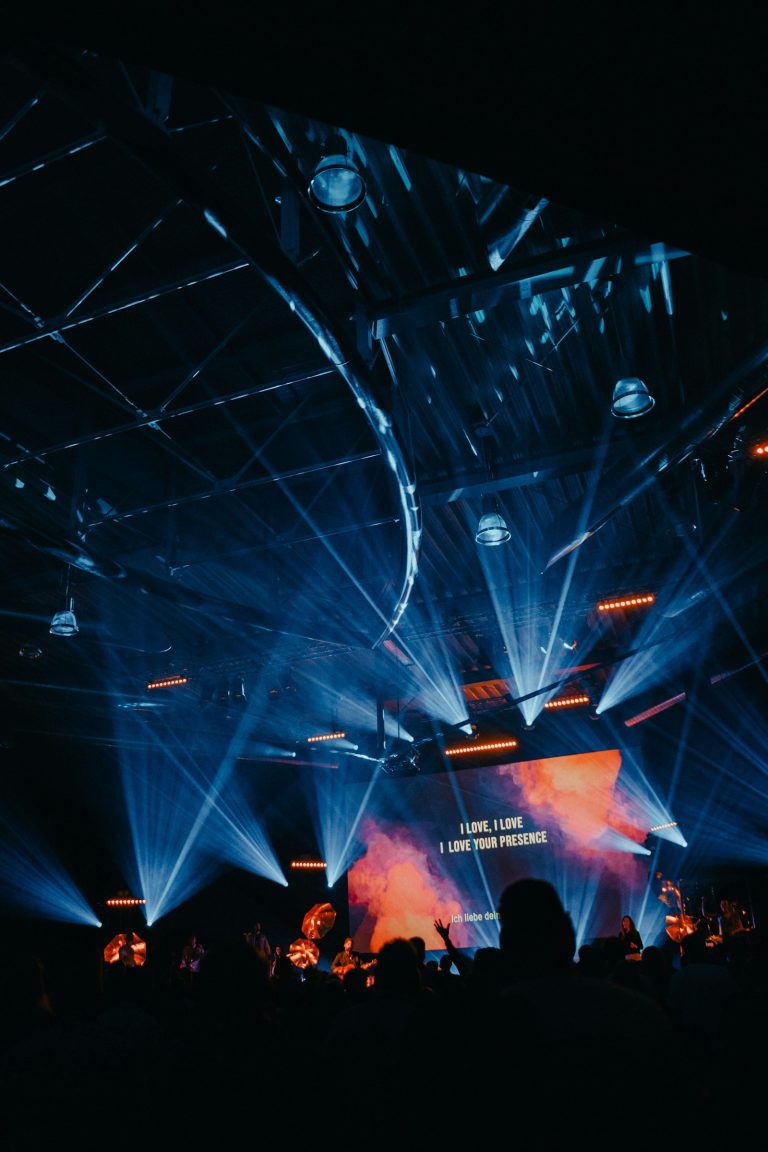
The result: “supertitles” that don’t sit off to the side as a utility, but are animated, embedded directly into the set, and treated as a genuine performance element. Bradley Vernatter, BLO’s Stanford Calderwood General Director & CEO, described it as work that “cracked open the possibilities of text and supertitles as a performance element,” with the text design, animation, and movement keeping audiences inside the world of the show.
The Hardware: Three Projectors, Two Surfaces, One Consistent Image
Pulling this off required a projection system that could hold consistent color and contrast across two very different surfaces in the same set. Epson’s large-venue laser projectors handled the job:
- Two Epson large-venue 4K 3-chip 3LCD laser projectors, converged into a single unified image, carried the animated supertitles across the set
- A third projector, the 10,000-lumen 4K Epson EB-PQ2010W, fitted with an ultra-short-throw snorkel lens, powered a rear-projected window built directly into the scenic design
Converging two projectors into one image is a technique used when a single unit can’t cover the needed brightness or surface area without visible seams — the projectors’ outputs are precisely aligned and blended so the result reads as one continuous picture rather than two overlapping ones. Epson’s large-venue line is built for exactly this kind of theatrical work: interchangeable lenses and a lightweight design let installation teams work around tight scenic environments without heavy-duty rigging.
Why the Snorkel Lens Matters
The third projector’s ultra-short-throw “snorkel” lens is worth calling out on its own. A snorkel lens extends the optical path away from the projector body, letting it be tucked into a tight space — in this case, built into the set itself — while still throwing a large, precisely placed image onto a nearby surface. That’s what made the rear-projected window effect possible without an obtrusive projector housing breaking the illusion.
Why This Story Matters Beyond Opera
This project is a useful reminder that “projector” covers a much wider range of use cases than the home theater and gaming projectors that dominate most coverage. Large-venue laser projection is core infrastructure for theatrical design, museum installations, immersive art, and live events — fields where brightness, color consistency, and flexible lens options matter just as much as they do in a living room, just at a very different scale and price point.
Who This Is Relevant To
- Theatrical and scenic designers exploring projection as a storytelling tool rather than a utility
- AV integrators working on multi-projector converged-image installations
- Anyone curious about the creative side of large-venue laser projection, beyond spec sheets
Frequently Asked Questions
What does it mean to “converge” two projectors into one image?
It means precisely aligning and blending the output of two projectors so they combine into a single seamless picture, typically used when one projector alone can’t cover the needed brightness or surface area.
What is a snorkel lens?
It’s an ultra-short-throw lens design that extends the optical path away from the projector body, allowing the projector itself to be tucked into a tight or hidden space while still projecting a large image nearby.
What projector model was used for the rear-projected window effect?
The Epson EB-PQ2010W, a 10,000-lumen 4K large-venue laser projector, fitted with an ultra-short-throw snorkel lens.
Conclusion
Most of what makes headlines in projector news is brightness numbers and price tags. This project is a good reminder of the other half of the story — what skilled designers can actually do with that technology once it leaves the spec sheet. Epson’s large-venue laser projectors gave MASARY Studios and Boston Lyric Opera the color consistency and installation flexibility to turn a translation utility into a genuine piece of stagecraft.
Source: Epson official press release via PR Newswire and Epson Newsroom (Sept. 16, 2026).