JMGO IRIS Ultra Max and IRIS Ultra: The First 4K@120Hz Smart Projectors Just Went Global
Note: JMGO’s IRIS Series was unveiled globally at IFA 2026 (September 4–8, Berlin), with pre-orders live now and shipments confirmed for October. This remains the most current, verifiable major projector story at time of publishing.
Introduction
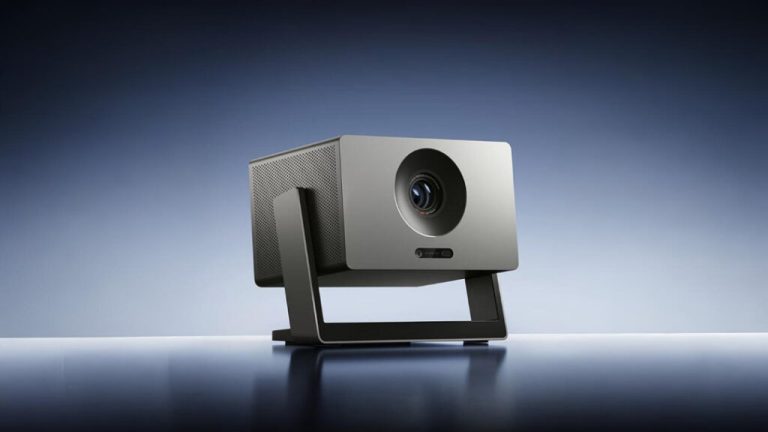
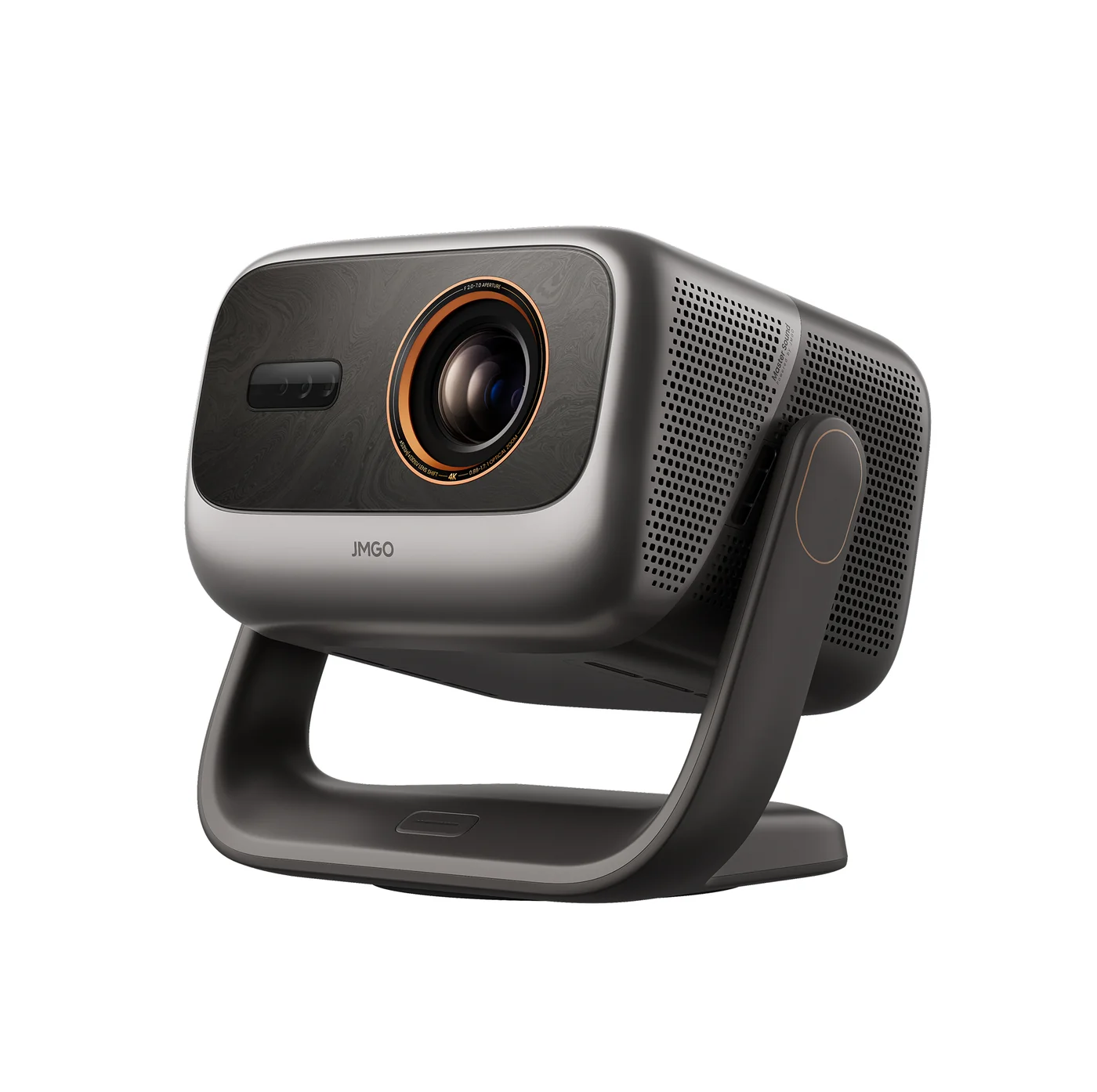
Projectors have always made gamers choose. You could have a sharp 4K picture, or you could have a fast, fluid 120Hz refresh rate — but getting both at once, on a single-chip DLP projector, has never really been possible. That trade-off is exactly what JMGO says it has solved with the global launch of its IRIS Series, led by the flagship JMGO IRIS Ultra Max and its more affordable sibling, the JMGO IRIS Ultra.
Unveiled to international audiences at IFA 2026 in Berlin and now open for pre-order worldwide, the IRIS Series is being positioned as the industry’s first smart DLP projector line capable of true 4K resolution at a genuine 120Hz refresh rate — not an interpolated trick, and not a resolution downgrade in disguise. That single claim, if it holds up under independent testing, would make the IRIS Ultra Max one of the more significant projector releases of 2026, particularly for console gamers, PC gamers, and sports fans who have long been told to pick either sharpness or smoothness.
In this article, we break down everything currently known about the JMGO IRIS Ultra Max and IRIS Ultra: full specifications, pricing, release timing, how the technology actually works, how it compares to rivals like AWOL Vision and Hisense, and — most importantly — who should actually consider buying one.
Product Overview
The IRIS Series consists of two models that share a platform but split on brightness, contrast, and mechanical extras:
- JMGO IRIS Ultra Max — the flagship, with 6,500 ISO lumens, 10,000:1 native contrast, and a motorized AI gimbal
- JMGO IRIS Ultra — the value option, with 4,500 ISO lumens, 7,000:1 native contrast, and the same core 4K@120Hz engine, minus the gimbal
Both projectors debuted domestically in China back in May 2026, where JMGO says it sold more than 5,000 units in the first three months — a strong early signal that convinced the company to fast-track an international rollout. The global unveiling landed at IFA 2026 (September 4–8, Berlin), with pre-orders opening on September 4 and first shipments scheduled for October 19 (IRIS Ultra Max) and October 26 (IRIS Ultra).
At their core, both projectors use JMGO’s MALC 6.0 triple-color laser light engine paired with a redesigned single-chip DLP optical path — specifically the Texas Instruments DLP472TP chipset run by dual DLPC8545 controllers. That dual-controller setup is the real engineering story here, and it’s worth understanding before we get into brightness numbers and price tags.
Why 4K at 120Hz Has Always Been Difficult
To understand what JMGO is claiming, it helps to know why this problem existed in the first place. Single-chip DLP projectors create a full-color image by flashing red, green, and blue light onto a single array of microscopic mirrors in rapid succession, fast enough that your eye blends the three colors into one picture. The mirrors physically tilt back and forth to do this, and that tilting speed has always been the bottleneck.
Most consumer DLP projectors push their mirrors through this red-green-blue cycle around 240 times per second. That’s enough bandwidth for 4K at 60Hz, but not enough to also carry a 120Hz signal at full native resolution. Projectors that advertise “4K 120Hz” compatibility have typically achieved it by accepting a 120Hz input and then either downscaling the resolution or relying on pixel-shifting shortcuts that don’t deliver full native detail at the higher refresh rate.
JMGO’s fix is a component it calls the HyperPulse Actuator, which doubles the mirror-shifting rate to roughly 480 times per second. Combined with the dual-DLPC8545 controller architecture — essentially two processors sharing the workload instead of one — JMGO says the IRIS Series can carry a full 3840 x 2160 signal at 120Hz from HDMI input all the way to the screen, with no compromise at either end. It’s a genuinely clever piece of engineering, and if independent lab testing confirms it works as advertised, it would be a legitimate first for this category of projector.
Display Technology and Brightness
Brightness is measured in ISO lumens, a standardized industry benchmark that makes it easier to compare projectors from different brands on equal footing. Here’s how the IRIS Series stacks up:
| Spec | IRIS Ultra Max | IRIS Ultra |
|---|---|---|
| Brightness | Up to 6,500 ISO lumens | Up to 4,500 ISO lumens |
| Native contrast | 10,000:1 | 7,000:1 |
| Light source | MALC 6.0 triple-laser | MALC 6.0 triple-laser |
| Color gamut | 110% BT.2020 | 110% BT.2020 |
| Color accuracy | ~Delta E 0.7 | ~Delta E 0.7 |
| Resolution | Native 4K (3840×2160) | Native 4K (3840×2160) |
| Refresh rate | 120Hz at full 4K | 120Hz at full 4K |
| Throw ratio | 0.88–1.7:1 | 0.88–1.7:1 |
| Lens shift | ±130% vertical, ±53% horizontal | ±130% vertical, ±53% horizontal |
| Motorized gimbal | Yes, 360° pan / 150° tilt | No |
| HDR | Dolby Vision, HDR10 (no HDR10+) | Dolby Vision, HDR10 |
| Gaming features | VRR, ALLM, 4K@120Hz | VRR, ALLM, 4K@120Hz |
| Operating system | Google TV, Google Gemini for TV | Google TV, Google Gemini for TV |
| Connectivity | 2x HDMI 2.1 (1 with eARC), USB 3.0, Wi-Fi 7, Bluetooth | 2x HDMI 2.1 (1 with eARC), USB 3.0, Wi-Fi 7, Bluetooth |
| Audio | ~25W integrated stereo | Integrated stereo speakers |
| Noise level (claimed) | ~26 dB | Not yet independently confirmed |
| Early-bird price (US) | $2,999 | $1,899 |
| MSRP (US) | $3,499 | $2,399 |
| Ships | October 19, 2026 | October 26, 2026 |
An ISO lumen rating in the 4,500–6,500 range is genuinely bright for a lifestyle-oriented smart projector. In practical terms, that’s enough output to keep a usable, colorful image on screen with curtains half-open or a lamp on in the room — something older, dimmer home projectors have always struggled with.
Contrast, HDR, and Color
Contrast is arguably more important than brightness for how “premium” an image actually looks, because it governs how deep your blacks are and how much shadow detail survives in dark scenes. The IRIS Ultra Max’s claimed 10,000:1 native contrast ratio is achieved through a Dual-Iris system — two physical, mechanical apertures inside the optical path, built from 15 blades in a 6+9 configuration. JMGO says this arrangement improves stray-light suppression by 11.34% over its earlier 12-blade design, with six selectable iris levels so the projector can be tuned for a bright room or a blacked-out theater.
Layered on top of that hardware is AI DBL (Dynamic Black Level), a processing feature that analyzes brightness zone-by-zone within each frame, deepening shadows while protecting highlight detail and skin tones from being overblown. Combined with 110% coverage of the BT.2020 color space and a claimed color accuracy around Delta E 0.7 — where anything under 1.0 is considered essentially imperceptible to the human eye — JMGO is aiming squarely at buyers who care about color fidelity, not just raw brightness.
On the HDR side, both models support Dolby Vision and HDR10, and notably, JMGO says Dolby Vision now works at the full 4K/120Hz combination — something that’s rare even on premium TVs, let alone projectors. There’s no mention of HDR10+ support in JMGO’s official materials.
Gaming Features
This is where the IRIS Series is clearly trying to make its mark. Both projectors support:
- True 4K at 120Hz over HDMI 2.1, verified with PS5, Xbox Series X, and PC sources
- VRR (Variable Refresh Rate), which syncs the display’s refresh rate to a game’s actual frame rate to reduce visible tearing
- ALLM (Auto Low Latency Mode), which automatically drops the projector into a low-lag gaming mode when it detects a compatible console or PC
- Anti-RBE hardware processing, aimed at reducing the “rainbow effect” — brief flashes of red, green, and blue that some viewers see around bright objects on single-chip DLP projectors, particularly during fast motion
The rainbow effect (RBE) has been the single biggest complaint leveled against DLP projectors for two decades, and it disproportionately affects fast-motion content — which is exactly the kind of content a 120Hz gaming projector is built for. JMGO says its Anti-RBE system works at the hardware level rather than through software processing, which in theory means it shouldn’t add fan noise or introduce input lag as a side effect. Independent reviewers haven’t yet had hands-on time to confirm how well this performs in real gameplay.
Placement, Design, and the Motorized Gimbal
Getting a giant picture onto a wall without hiring an installer is a genuine pain point for a lot of buyers, and the IRIS Ultra Max in particular is built to solve it. It combines a 0.88–1.7:1 optical zoom range with four-way lens shift (±130% vertical, ±53% horizontal), allowing the image to be resized and repositioned optically rather than relying purely on digital keystone correction.
The Ultra Max goes a step further with a motorized AI gimbal capable of 360-degree panning and 150-degree tilting, paired with AI Screen Fitting and AI Spatial Image Memory. The standard IRIS Ultra keeps the same optical zoom and lens shift hardware but drops the motorized gimbal to hit its lower price point.
Operating System, Audio, and Connectivity
Both projectors run Google TV with support for Google Gemini for TV (availability varies by region), giving direct access to major streaming apps without an external streaming stick. Connectivity includes Wi-Fi 7, Bluetooth, two HDMI 2.1 ports (one with eARC), and USB 3.0.
On audio, the IRIS Ultra Max carries a built-in stereo system rated at roughly 25 watts total output. It’s serviceable for casual viewing, but JMGO clearly expects serious home-theater buyers to route audio out to an external system via the eARC-enabled HDMI port.
Power Consumption and Noise Level
JMGO has published a claimed maximum operating noise level of approximately 26 dB for the IRIS Ultra Max — a genuinely quiet figure if it holds up in third-party testing, especially for a projector pushing 6,500 ISO lumens through a triple-laser engine. Detailed power consumption figures in watts have not yet been published; we’ll update this article once JMGO’s full technical datasheet becomes available.
Throw Ratio and Projection Size
With a 0.88–1.7:1 throw ratio and both optical zoom and lens shift, the IRIS Series is built for standard “regular throw” placement rather than ultra-short-throw (UST) positioning, giving buyers more flexibility in room layouts where a UST projector’s cabinet-close placement isn’t practical.
Pricing and Availability
JMGO IRIS Ultra Max
- Early-bird pre-order price: $2,999 (US) / €2,999 (EU)
- Regular retail price: $3,499 (US) / €3,499 (EU)
- Ships: October 19, 2026
- Pre-order bonus: 50% off the new JMGO Photon Anti-Speckle Screen
JMGO IRIS Ultra
- Early-bird pre-order price: $1,899 (US) / €1,999 (EU)
- Regular retail price: $2,399 (US) / €2,499 (EU)
- Ships: October 26, 2026
- Pre-order bonus: 30% off the Photon Anti-Speckle Screen
Every pre-order includes the projector, remote and batteries, lens cloth, quick-start guide, power adapter, and charging cable, plus a choice of a floor stand or ceiling mount, two pairs of 3D glasses, and one 8K-rated HDMI cable.
How the IRIS Series Compares to the Previous JMGO Generation
JMGO’s previous flagship, the N3 Ultimate, launched globally in April 2026 with up to 5,800 ISO lumens and the same optical zoom/lens-shift DNA, but topped out at a standard 60Hz refresh rate. The IRIS Ultra Max effectively takes that platform and adds the headline 120Hz capability plus a higher brightness ceiling, at a comparable early-bird price.
How It Compares to the Competition
| Model | Type | Brightness | Refresh Rate | Throw Ratio | Price |
|---|---|---|---|---|---|
| JMGO IRIS Ultra Max | Regular-throw DLP | 6,500 ISO lumens | 4K@120Hz | 0.88–1.7:1 | $3,499 ($2,999 early-bird) |
| JMGO IRIS Ultra | Regular-throw DLP | 4,500 ISO lumens | 4K@120Hz | 0.88–1.7:1 | $2,399 ($1,899 early-bird) |
| AWOL Vision LuxVision | Ultra-short-throw | 6,000 ISO lumens | Up to 120Hz (claimed 1ms lag) | 0.18:1 | ~$5,999 |
| JMGO N3 Ultimate (prior-gen) | Regular-throw DLP | 5,800 ISO lumens | 4K@60Hz | 0.88–1.7:1 | $2,999 |
The closest direct rival at IFA 2026 was AWOL Vision’s LuxVision, a UST model with 6,000 ISO lumens and a claimed 1ms input lag, but it retails around $5,999 — roughly $3,000 more than the IRIS Ultra Max’s early-bird price. JMGO is trading UST’s furniture-hugging convenience for a lower price and more placement flexibility elsewhere in the room.
Who Should Buy the JMGO IRIS Ultra Max
- Console and PC gamers who want a genuinely large-screen 4K@120Hz experience without compromising resolution for refresh rate
- Sports and movie fans who want a brighter image that survives some ambient light
- Buyers with awkward or shared rooms, thanks to the lens shift, optical zoom, and (on the Ultra Max) the motorized gimbal
- Anyone comparing against a premium 65–85 inch TV and wants a bigger picture for less money per inch
Who Might Want to Wait
- Purists who want independently verified performance numbers — third-party lab tests of brightness, contrast, input lag, and noise haven’t been published yet
- Dedicated dark-theater builders who may prefer JVC’s D-ILA lineup or Epson’s ultra-high-lumen QL7000 for pure black-level performance
- Buyers who specifically want an ultra-short-throw form factor for cabinet-close placement
Pros and Cons
Pros:
- First claimed native 4K@120Hz on a single-chip smart DLP projector
- Strong brightness (up to 6,500 ISO lumens) and contrast (10,000:1) for the price
- Dolby Vision supported even at 4K/120Hz
- Extensive optical placement flexibility (zoom, lens shift, and gimbal on the Max)
- Built-in Google TV with Gemini support
- Competitively priced against UST rivals like AWOL Vision’s LuxVision
Cons:
- No HDR10+ support confirmed
- Independent, third-party benchmark testing isn’t available yet
- Standard throw ratio, not ultra-short-throw
- Built-in audio (25W) isn’t a substitute for a proper home-theater sound system
- IRIS Ultra drops the motorized gimbal to hit its lower price
Market Impact
The IRIS Series arrives as the projector market splits into two camps: ultra-bright UST laser TVs built to replace big-screen TVs outright (AWOL Vision, Hisense, Formovie), and flexible, regular-throw “lifestyle” projectors that prioritize placement freedom (JMGO, XGIMI, Samsung’s Freestyle line). By pushing 120Hz gaming into the second category for the first time, JMGO is opening a niche neither camp has fully addressed. If real-world performance holds up, expect XGIMI, Dangbei, and other rivals to respond with their own 4K@120Hz announcements within the next product cycle or two.
Future Availability
With pre-orders already open as of September 4, 2026, and confirmed shipping dates of October 19 (IRIS Ultra Max) and October 26 (IRIS Ultra), both models should be in early buyers’ hands well before the holiday shopping season. Expect wider retail availability, including potential Amazon listings, to follow shortly after the initial direct-to-consumer shipping window closes.
FAQ
Is the JMGO IRIS Ultra Max really the first 4K 120Hz projector?
It’s the first single-chip smart DLP projector to claim genuine, uncompromised 4K resolution at a full 120Hz refresh rate, according to JMGO. Independent lab verification is still pending.
How much does the JMGO IRIS Ultra Max cost?
The early-bird pre-order price is $2,999 (US) / €2,999 (EU), rising to $3,499 / €3,499 once the pre-order window closes.
When does the JMGO IRIS Ultra Max ship?
Confirmed shipping begins October 19, 2026. The IRIS Ultra follows on October 26, 2026.
What’s the difference between the IRIS Ultra Max and the IRIS Ultra?
Both share the same 4K@120Hz engine, optical zoom, and lens shift. The Ultra Max adds higher brightness, higher contrast, and a motorized AI gimbal.
Does the JMGO IRIS Ultra Max support Dolby Vision for gaming?
Yes, at the full 4K/120Hz combination.
Is the IRIS Ultra Max an ultra-short-throw (UST) projector?
No. It uses a standard 0.88–1.7:1 throw ratio, unlike UST models such as AWOL Vision’s LuxVision.
What operating system does the JMGO IRIS Series run?
Google TV, with Google Gemini for TV support where regionally available.
Conclusion
The JMGO IRIS Ultra Max and IRIS Ultra aren’t just another pair of laser projectors chasing bigger lumen numbers — they’re targeting a specific, long-standing limitation of DLP projection technology and claiming to have solved it. Whether that claim survives contact with independent lab testing and real living rooms remains to be seen, but on paper, JMGO has assembled a genuinely compelling package: strong brightness, deep contrast, flexible placement, Dolby Vision at full resolution and refresh rate, and pricing that undercuts its closest UST rival by thousands of dollars. For gamers and movie fans shopping in the $2,000–$3,500 range this fall, the IRIS Series just became one of the most interesting new options on the market — and we’ll be updating this article with hands-on impressions and lab-verified numbers as they become available.